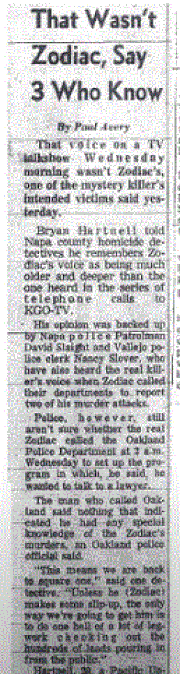
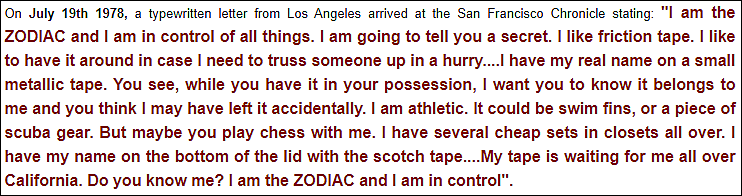
When the author of the July 19th 1978 letter typed their cryptic communication they used the word "tape" four times, including "I like friction tape", "I have my name on the bottom of the lid with the scotch tape", "My tape is waiting for me all over California" and "I have my real name on a small metallic tape". The fourth phrase is different from the rest because it singularises the object by using "a small metallic tape" rather than "I have my name on metallic tape". It also makes a point of distinction in this instance by describing the tape as small, which the author fails to do in the three other examples. The author continued by stating "I have my real name on a small metallic tape. You see, while you have it in your possession, I want you to know it belongs to me and you think I may have left it accidentally". This wording implies that law enforcement have in their possession "a small metallic tape" that was left deliberately by the author and was secured by investigators.
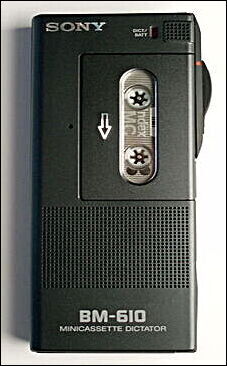
Metallic mini-cassettes (Phillips) and micro-cassettes (Olympus) were introduced in 1967 and 1969 respectively, so the wording of somebody claiming to be Zodiac, who stated "I have my real name on a small metallic tape", could conceivably have left police a message on "a small metallic tape" with his name written on the casing. The author used the wording "a small metallic tape" instead of "a small tape", suggestive that the word "metallic" was to distinguish this tape from the others. The same reasoning can apply to the use of the word "small", which wasn't used in the three other phrases. This descriptor may have been important if the author of the letter had left a micro or mini-cassette at a crime scene with a message.
Metallic mini-cassettes (Phillips) and micro-cassettes (Olympus) were introduced in 1967 and 1969 respectively, so the wording of somebody claiming to be Zodiac, who stated "I have my real name on a small metallic tape", could conceivably have left police a message on "a small metallic tape" with his name written on the casing. The author used the wording "a small metallic tape" instead of "a small tape", suggestive that the word "metallic" was to distinguish this tape from the others. The same reasoning can apply to the use of the word "small", which wasn't used in the three other phrases. This descriptor may have been important if the author of the letter had left a micro or mini-cassette at a crime scene with a message.
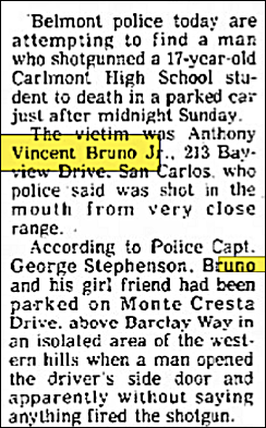
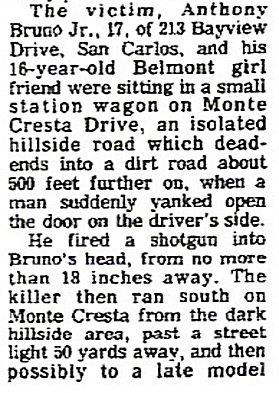
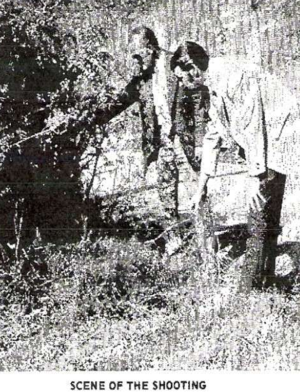
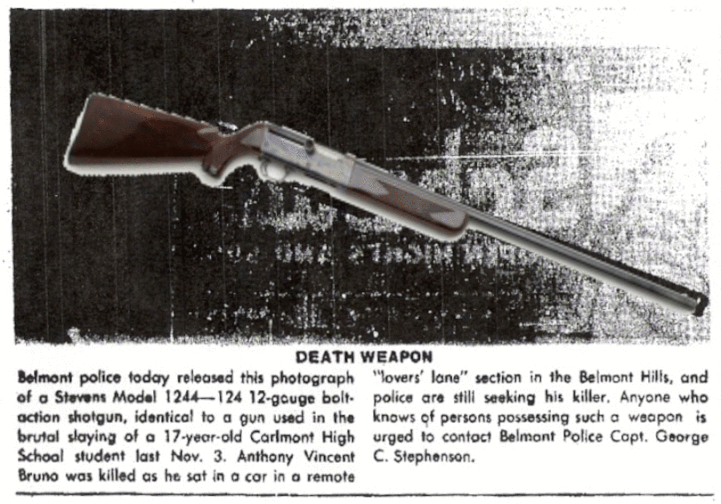
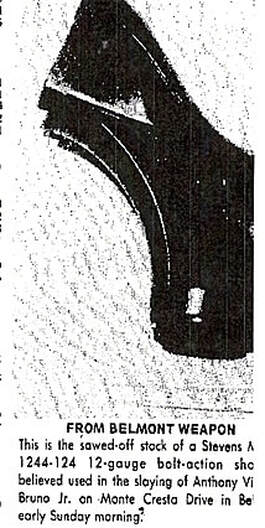
On Sunday November 2nd 1975, a man walked up to a couple parked in a lovers' lane in Belmont, California (Monte Cresta Drive) and opened fire with a shotgun, killing Anthony Vincent Bruno instantly.
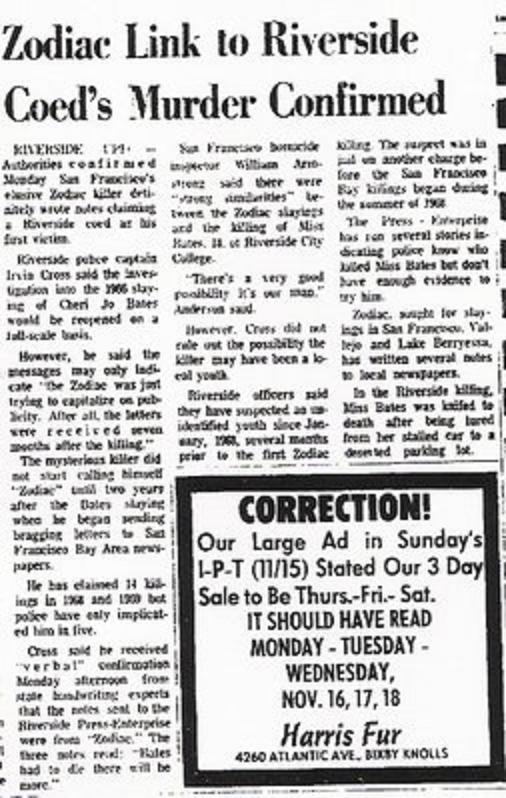
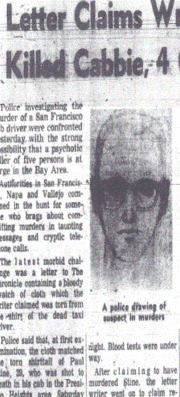
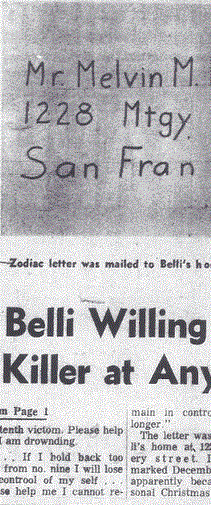
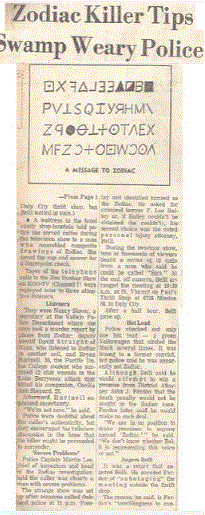
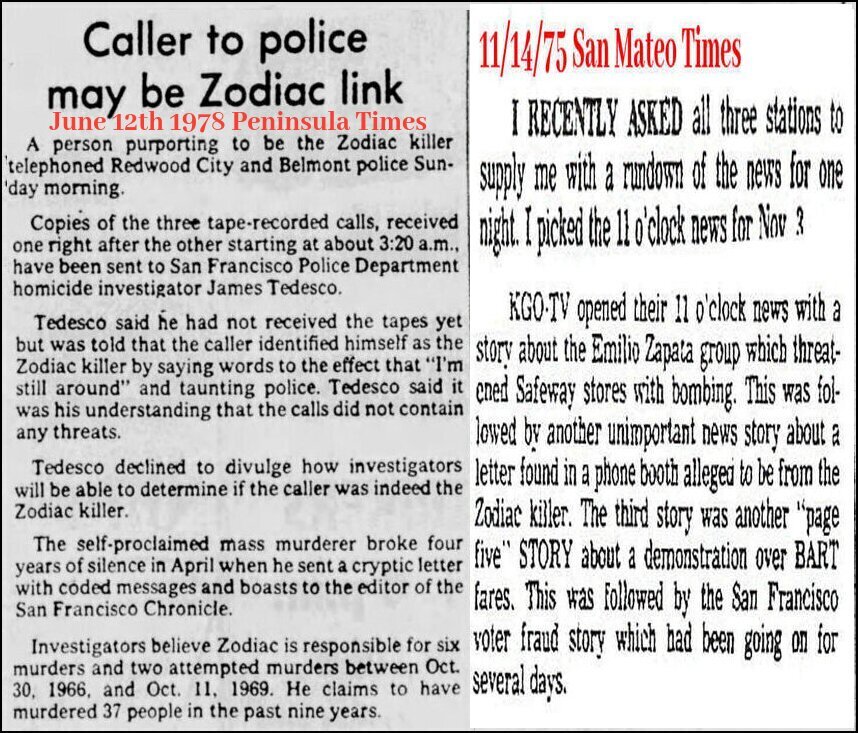
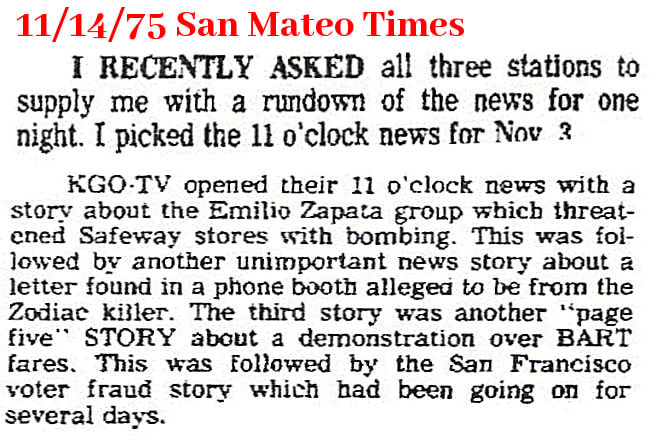
Zodiac researcher, Mike Morford, highlighted a San Mateo newspaper article dated November 14th 1975 (shown below) and stated "The reporter, a man named Bob Foster, mentions that on the night of November 3, 1975, the 11 pm TV news on channel KGO ran a story about a Zodiac letter being found in a phone booth. This is pretty interesting to me for a couple reasons regarding the timing. First of all because, the night before, on 11/2/75, a young man and his girlfriend were attacked on a lovers' lane by a gun wielding man. The male victim, Vincent Bruno was killed, but his girlfriend survived. If I recall correctly, there may have been a letter & cassette tape found the same night in a phone booth not far from the attack site, from someone claiming to be Zodiac".
If Mike Morford's recollection is correct, then a potential message may have been left in Belmont by the Zodiac Killer in the form of a cassette tape, irrespective of whether he committed the crime or not. He may have heard the news of the murder and mischievously left a letter and cassette tape in a nearby phone booth, yet again claiming a murder he didn't commit. But, if this were true, why would the Zodiac Killer have revisited Belmont in his mind on July 19th 1978, nearly three years later? The act of leaving "a small metallic tape" in Belmont may have been triggered by recent activity.
One month before the mailing of the typed July 19th 1978 letter, on June 11th 1978, somebody claiming to be the Zodiac Killer telephoned the Redwood City and Belmont police announcing that "I'm still around". The newspaper article (June 12th 1978) stated "Copies of three tape-recorded calls, received one right after the other starting at about 3:20am, have been sent to San Francisco Police Department homicide investigator James Tedesco. He had not received the tapes yet but was told that the caller identified himself as the Zodiac Killer". Therefore, we have the possibility of the Zodiac Killer making several threats to Belmont police on June 11th 1978, which they recorded on tape, followed one month later by somebody mailing a letter to the San Francisco Chronicle on July 19th 1978, stating "I am the Zodiac" and using the word "tape" four times, including "I have my name on a small metallic tape" and "you have it in your possession". Did the Zodiac Killer suggest that he was "still around" in Belmont, having previously left a cassette tape there three years earlier, which was also forwarded to the San Francisco Police Department and remained in their possession?
FURTHER READING: A PAWN IN A GAME OF DEATH
Zodiac researcher, Mike Morford, highlighted a San Mateo newspaper article dated November 14th 1975 (shown below) and stated "The reporter, a man named Bob Foster, mentions that on the night of November 3, 1975, the 11 pm TV news on channel KGO ran a story about a Zodiac letter being found in a phone booth. This is pretty interesting to me for a couple reasons regarding the timing. First of all because, the night before, on 11/2/75, a young man and his girlfriend were attacked on a lovers' lane by a gun wielding man. The male victim, Vincent Bruno was killed, but his girlfriend survived. If I recall correctly, there may have been a letter & cassette tape found the same night in a phone booth not far from the attack site, from someone claiming to be Zodiac".
If Mike Morford's recollection is correct, then a potential message may have been left in Belmont by the Zodiac Killer in the form of a cassette tape, irrespective of whether he committed the crime or not. He may have heard the news of the murder and mischievously left a letter and cassette tape in a nearby phone booth, yet again claiming a murder he didn't commit. But, if this were true, why would the Zodiac Killer have revisited Belmont in his mind on July 19th 1978, nearly three years later? The act of leaving "a small metallic tape" in Belmont may have been triggered by recent activity.
One month before the mailing of the typed July 19th 1978 letter, on June 11th 1978, somebody claiming to be the Zodiac Killer telephoned the Redwood City and Belmont police announcing that "I'm still around". The newspaper article (June 12th 1978) stated "Copies of three tape-recorded calls, received one right after the other starting at about 3:20am, have been sent to San Francisco Police Department homicide investigator James Tedesco. He had not received the tapes yet but was told that the caller identified himself as the Zodiac Killer". Therefore, we have the possibility of the Zodiac Killer making several threats to Belmont police on June 11th 1978, which they recorded on tape, followed one month later by somebody mailing a letter to the San Francisco Chronicle on July 19th 1978, stating "I am the Zodiac" and using the word "tape" four times, including "I have my name on a small metallic tape" and "you have it in your possession". Did the Zodiac Killer suggest that he was "still around" in Belmont, having previously left a cassette tape there three years earlier, which was also forwarded to the San Francisco Police Department and remained in their possession?
FURTHER READING: A PAWN IN A GAME OF DEATH








 RSS Feed